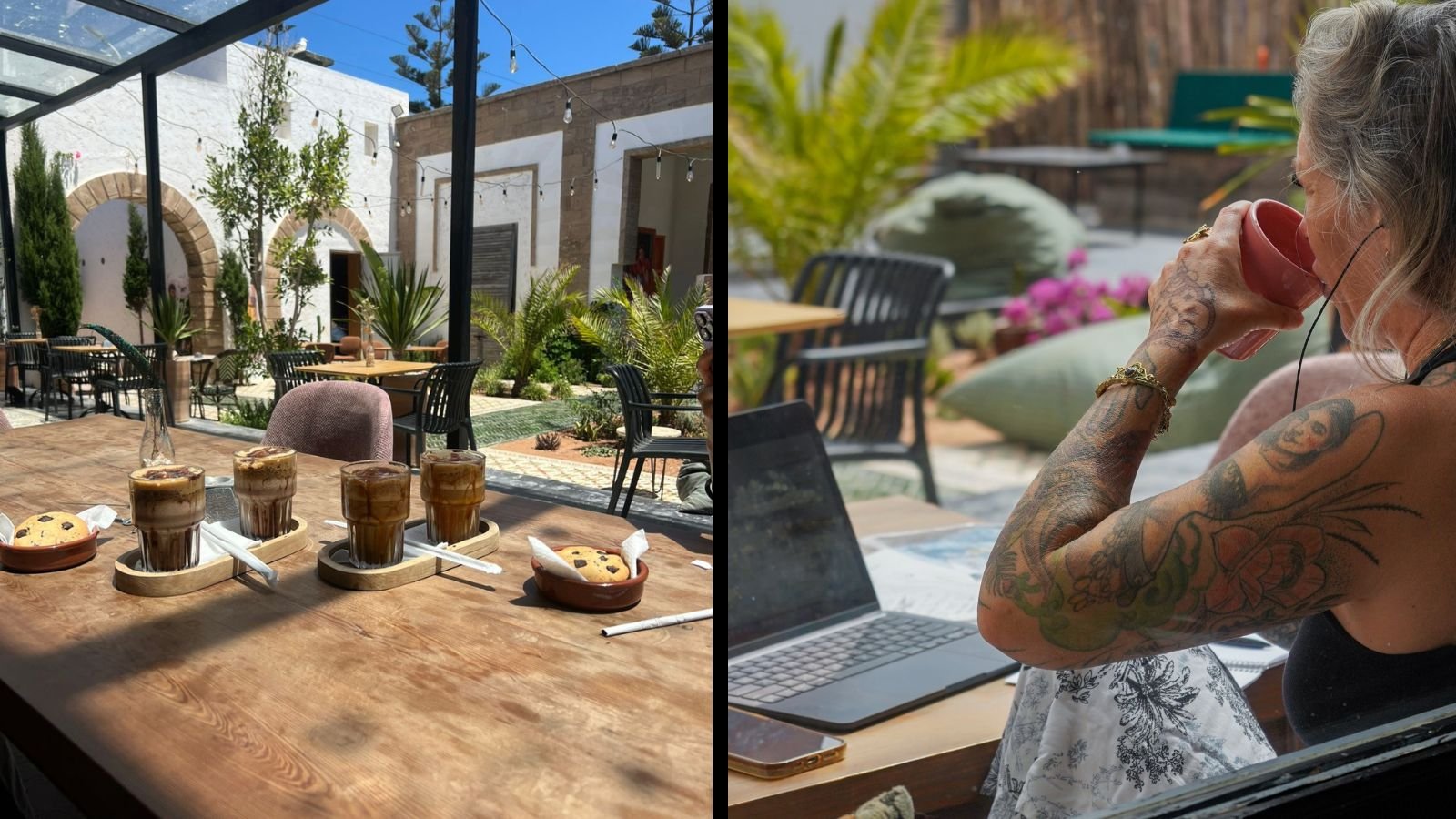
A real guide to Moroccan breakfast — what harsha, baghrir and amlou actually are, why they matter, and where to try them properly in Essaouira.
Order "breakfast" in Morocco and you'll quickly notice it doesn't mean one plate — it means a small table full of them. Bread, something to dip it in, something sweet, something savory, and mint tea holding the whole thing together. If you've never come across harsha, baghrir, or amlou before, here's what they actually are, how they're made, and why a Moroccan breakfast rewards taking your time rather than rushing through it.
The Moroccan Breakfast Table, Explained
The first thing to understand is that it's built to be shared, not plated individually. A few small dishes go in the middle of the table — honey here, olive oil there, a bowl of amlou, maybe some olives and cheese — and everyone tears off bread and dips into whatever they want. It's unhurried by design; a proper Moroccan breakfast can easily take an hour, and that's considered normal rather than indulgent.
Harsha
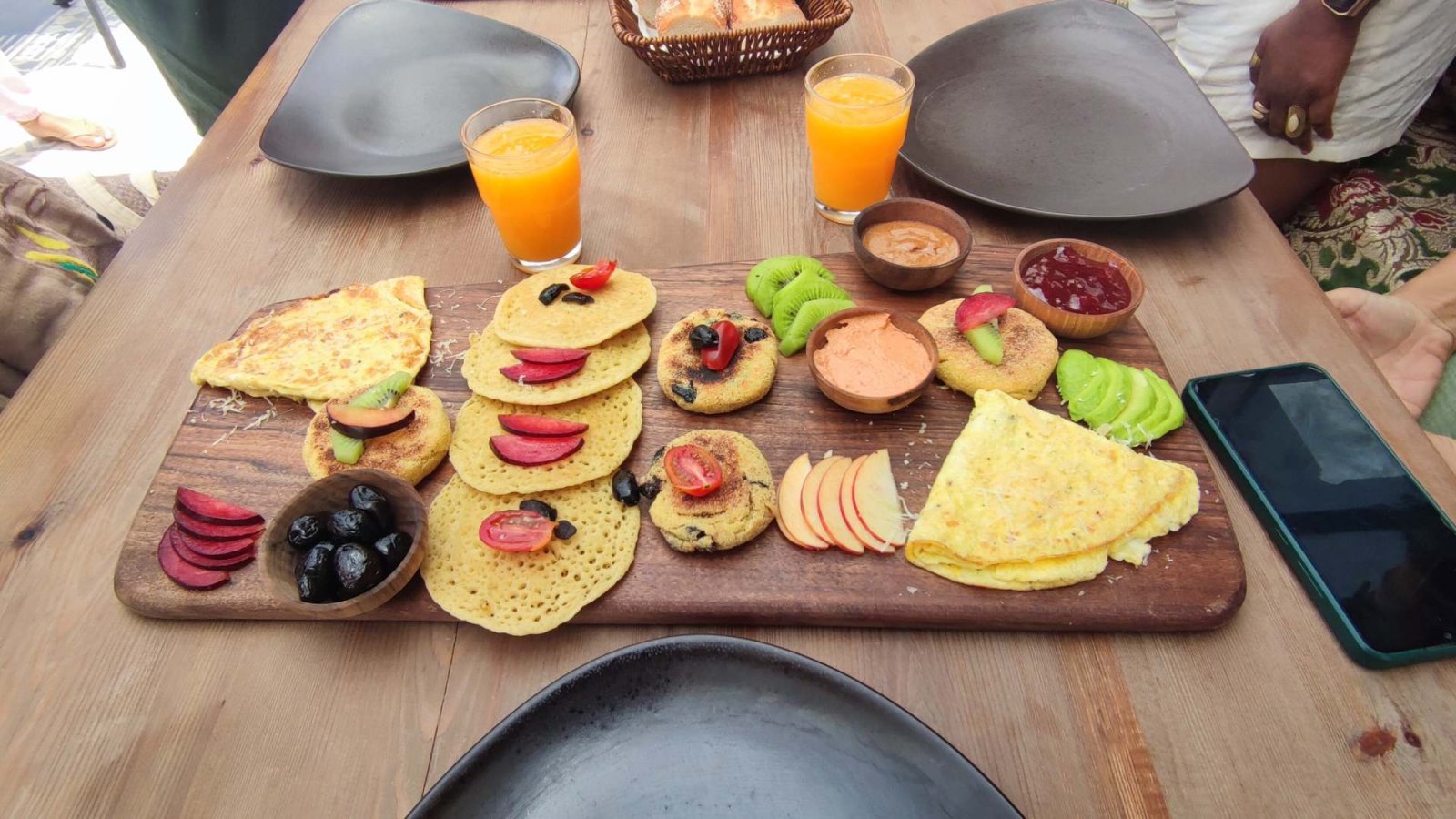
Harsha (sometimes spelled harcha) is a semolina flatbread cooked on a griddle rather than baked — dense, slightly crumbly, with a texture somewhere between a scone and a cornbread. It's circular, usually a few centimeters thick, and gets split open while warm and filled with butter, honey, or amlou. The semolina gives it a coarser, more rustic bite than most Western breakfast breads, which is part of the appeal.
Baghrir, the "Thousand-Hole" Pancake
Baghrir is the one that surprises people most. It's a yeasted semolina batter left to ferment for half an hour to an hour, then cooked on a griddle — but only on one side. As it cooks, bubbles rise and burst across the surface, leaving behind dozens of tiny holes (the "thousand holes" nickname isn't much of an exaggeration). The result is spongy and slightly elastic, closer to a crumpet than a pancake in texture, and it's built specifically to soak up melted butter and honey poured over the top — the holes exist to catch it.
Amlou gets compared to peanut butter constantly, and it's a fair shorthand but not quite accurate — it's smoother, more liquid, and built from completely different ingredients: roasted almonds, honey, and argan oil, ground together into a thick, dippable paste. It's the argan oil that gives it a flavor nothing else really matches — nutty and slightly earthy in a way peanut butter isn't.
Argan oil itself is worth knowing about beyond amlou. It comes specifically from the argan tree, which grows almost exclusively in southwestern Morocco — an area UNESCO designated the Arganeraie Biosphere Reserve back in 1998, and whose provinces explicitly include Essaouira. So the region around Essaouira isn't just somewhere you can find good amlou, it's genuinely part of where the oil itself comes from — the traditional know-how around cultivating and pressing it was even separately recognized by UNESCO as Intangible Cultural Heritage in 2014. That's a big part of why it shows up so often and so well-made on breakfast tables around here specifically, rather than being an imported specialty shipped in from elsewhere in the country.
The oil itself is genuinely labor-intensive to produce — the traditional method involves cracking the hard argan nuts by hand before roasting and pressing them, which is part of why good amlou has a real cost to it rather than being a cheap breakfast filler. Much of that production work, traditionally, has been done by women's cooperatives in the region, which is worth knowing if you ever see "cooperative-made" argan products for sale locally — it's not just a marketing phrase.
What Else Shows Up on the Table
Harsha, baghrir, and amlou are the three worth knowing by name, but they rarely appear alone. Msemen — a flaky, layered flatbread folded into a square and cooked on a griddle — is just as common, and gets the same butter-and-honey treatment. Fresh jben (a soft, mild goat cheese), olives, and a plain khobz loaf usually round things out, alongside eggs prepared any number of ways. None of it is complicated individually — the appeal is in the variety sitting on the table at once, letting everyone build their own combination rather than committing to a single dish.
Why Essaouira Is a Genuinely Good Place to Eat This Way
Beyond the argan connection, Essaouira's whole morning rhythm suits a slow breakfast better than most places. Mornings here are mild and often start with a light sea fog that burns off by early afternoon — nothing about the climate is pushing you to rush outside. The town itself moves at an unhurried pace generally, and sitting over bread, amlou, and mint tea for the better part of an hour fits that completely, rather than feeling like it's cutting into a busy day.
Where to Actually Try It
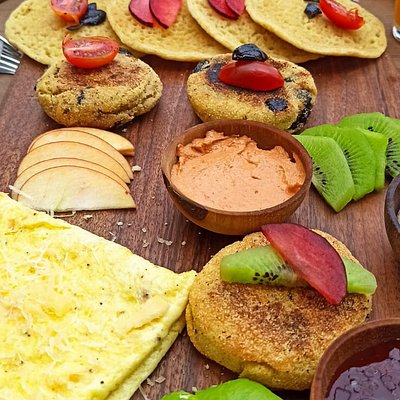
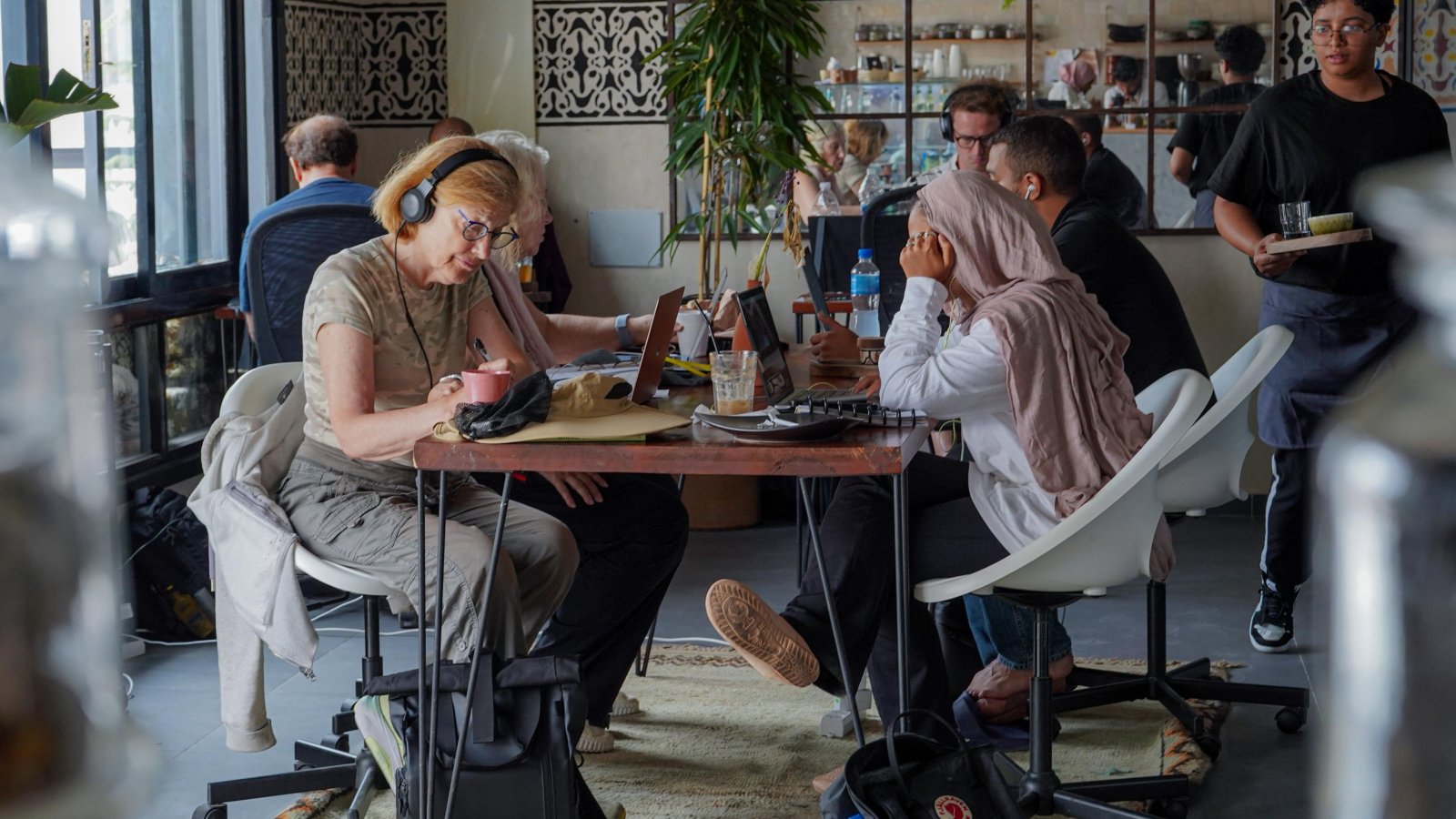
At Noqta Space, the closest thing to the full traditional spread is the Beldi Breakfast Board (75 DH for one, 120 DH for two) — an omelette with tomato sauce and cheese, two harsha, two baghrir, olives, jam, a paprika-cheese dip, amlou, and bread, served with your choice of Americano, cappuccino, or Moroccan mint tea. It's built around exactly the dishes explained above, rather than a Westernized version of "Moroccan-style" breakfast. If you'd rather work while you eat, it's just as easy to bring it to a coworking desk as it is to linger over it at a café table.
FAQ
What is a typical Moroccan breakfast?
A shared table of bread alongside dishes like harsha, baghrir, amlou, olives, cheese, and honey, with mint tea — built for dipping and sharing rather than one plate per person.
Is amlou the same as peanut butter?
Not quite — it's smoother and more liquid, made from roasted almonds, honey, and argan oil rather than just peanuts, with a distinct nutty flavor from the argan oil.
What does baghrir taste like?
Fairly mild and slightly sweet on its own — most of the flavor comes from what's poured over it, usually melted butter and honey, which soaks into the holes.
Is harsha sweet or savory?
Neither by default — it's a plain semolina bread, so it takes on whatever you fill it with, whether that's honey and amlou (sweet) or cheese and olives (savory).
Why is argan oil associated with this region of Morocco specifically?
Argan trees grow almost exclusively in southwestern Morocco, which includes the area around Essaouira — so argan oil here is genuinely regional, not imported from elsewhere in the country.
Can I get a full traditional breakfast at Noqta Space?
Yes — the Beldi Breakfast Board includes harsha, baghrir, amlou, and the other core components of a traditional spread, plus a hot drink.
What's msemen, and is it different from harsha?
Yes — msemen is a flaky, layered flatbread folded into a square, while harsha is a denser, crumblier semolina bread. Both are usually served the same way, with butter and honey.
Is Moroccan breakfast vegetarian-friendly?
Very much so — bread, honey, amlou, cheese, olives, and eggs make up most of a traditional spread, with meat rarely a central part of it.
Should I eat amlou with a spoon or dip bread into it?
Traditionally it's for dipping — tear off a piece of warm bread and use it to scoop the amlou, the same way you might use bread with hummus, rather than spreading it on with a knife.
Worth Trying at Least Once
Even if you only try one Moroccan breakfast dish while you're here, make it amlou with warm bread — it's the single easiest way to understand why Moroccans take this meal as seriously as they do. See the full breakfast menu to plan your order before you go.